- Social projects
- Kazakhstan
- 2026
“Berekeli Dastarkhan”: the concept, mechanic and materials for the final conference of the Omirlik Maqsat programme
Omirlik Maqsat is a two-year programme by the Eurasia Foundation of Central Asia, supported by the Citi Foundation. It helped women with disabilities and parents of children with special needs get out of hidden homelessness or avoid it. For the programme's final conference we reinvented the format: we proposed a creative concept and a family-recipe exchange mechanic, designed and produced a banner, cards and a recipe book. Every guest took home someone else's recipe and the stories of the programme's participants.







Starting point
Hidden homelessness is hard to see from the outside: a person may have a job but no stable home of their own. The programme helped participants strengthen their financial independence, get legal advice on housing, find work and improve their living conditions. Two years of work are usually summed up with talks and numbers, but that format barely conveys what stands behind them.
What we learned about the audience
In Central Asia, the main symbol of home is the dastarkhan, the shared table. Food is a language of love, care and family memory. So we built all the materials on the chain “hidden homelessness → home → dastarkhan” and invited guests not just to listen, but to exchange family recipes.
Task
Reinvent the approach to the final conference and its handouts. The task had two sides: show the programme's results at scale and give them a human face. The foundation team, the donor, regional partner NGOs, ministry representatives and the media needed to see not only what the programme did, but how it changed the lives of specific people.
Solution
- 01
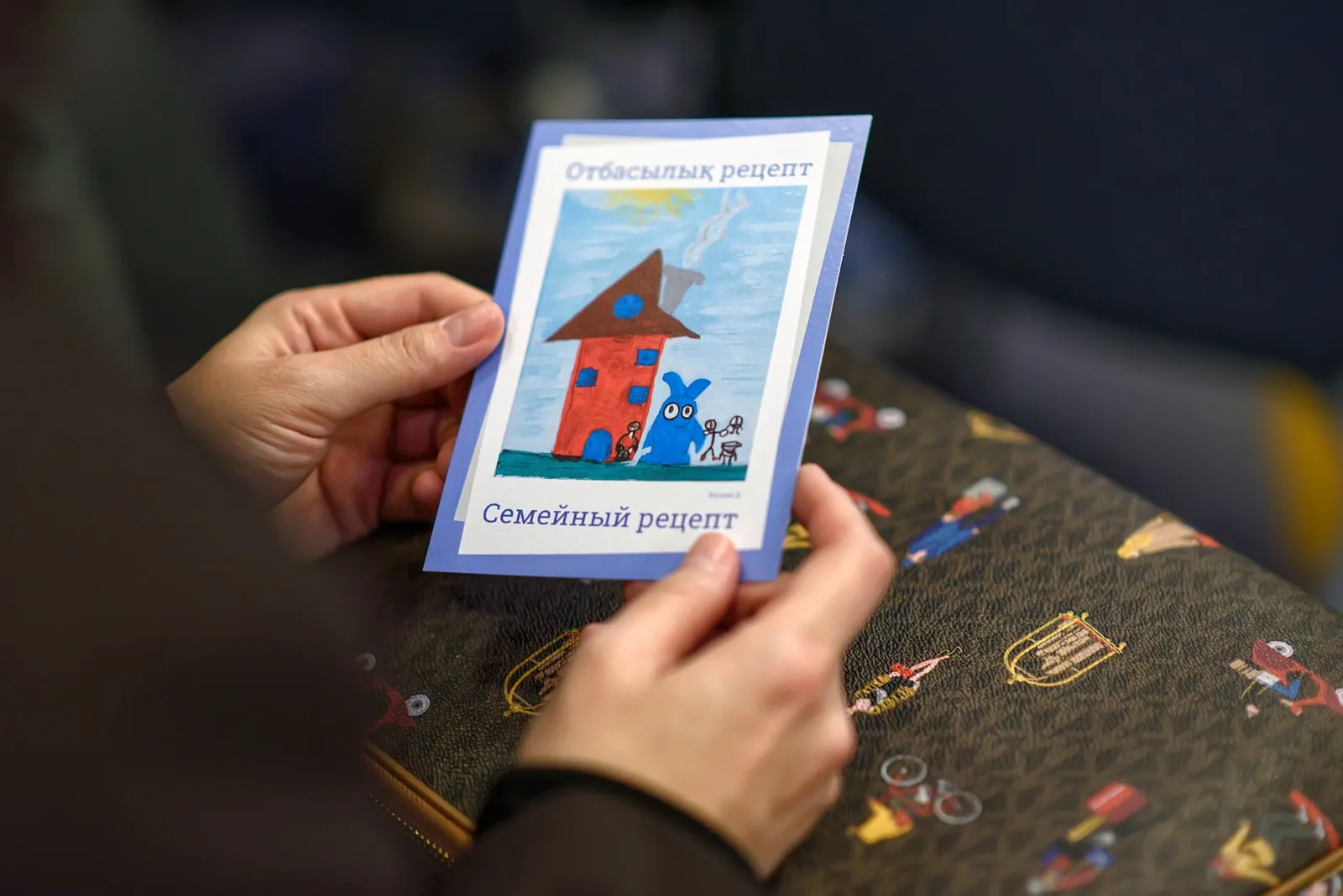
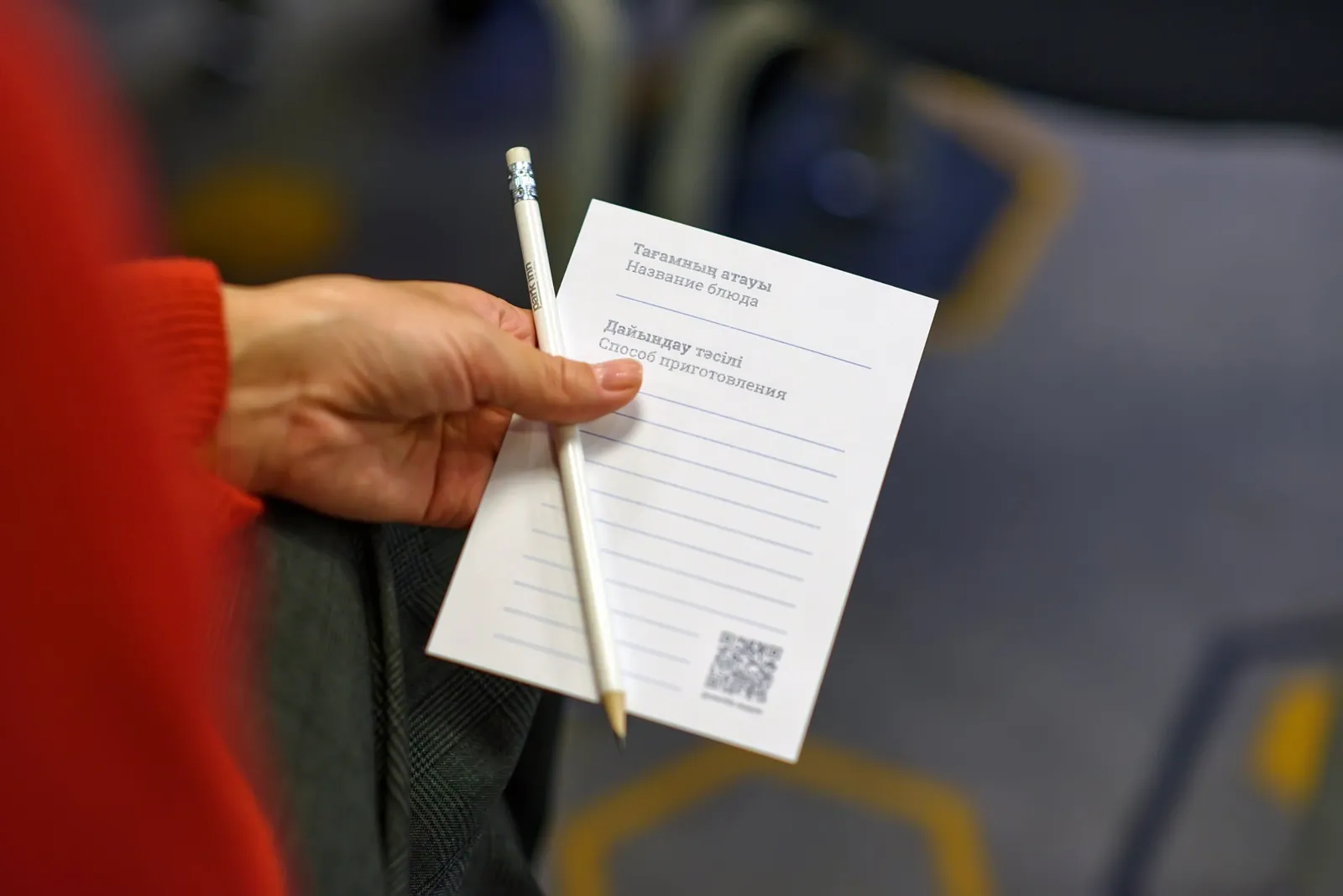
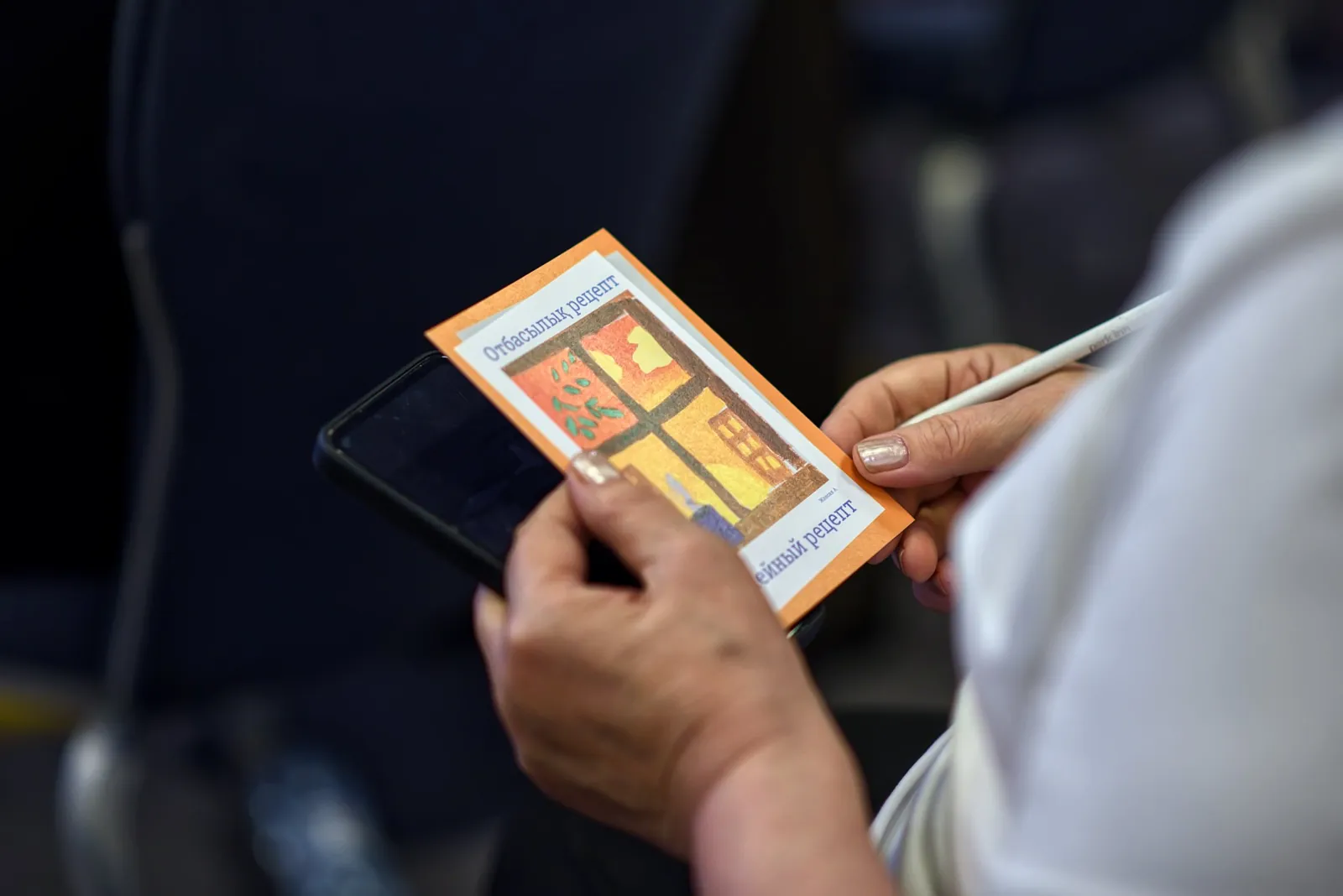
Concept and mechanic. Every guest wrote on a card the recipe of a dish that means “home” to them: some wrote a real family recipe, others a “recipe for a happy life”. The cards were collected in a basket, and at the end of the evening everyone drew someone else's and put it in the pocket of their recipe book. So everyone gave away their recipe and left with another participant's.
- 02
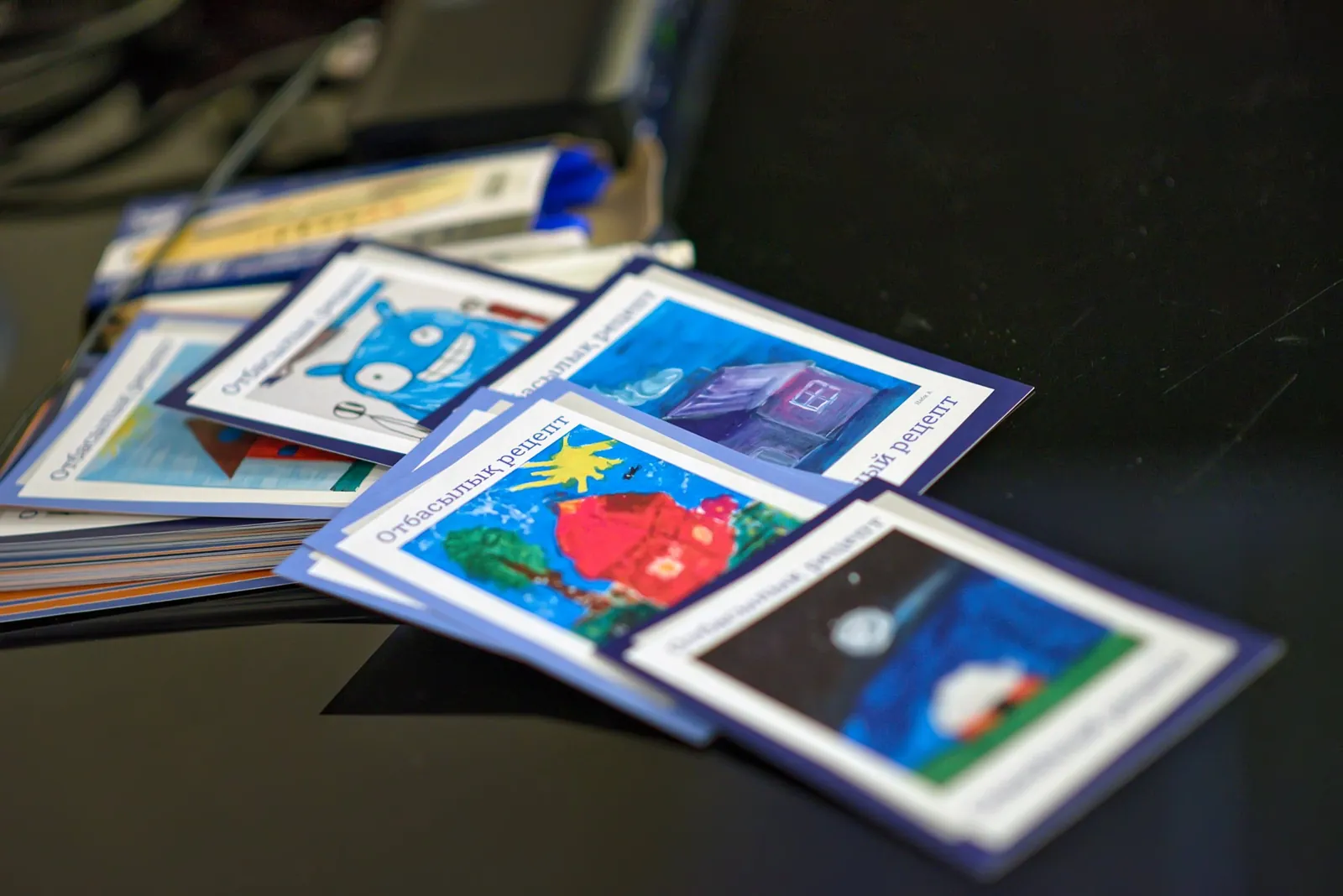
“Otbasylyq retsept / Family recipe” cards. The fronts show 20 drawings by children with special needs: at an open-air painting session the EFCA team held with MamaPro, they drew what home means to them. We used these works rather than random pictures, so the conference's visual language grew out of the programme itself.
- 03
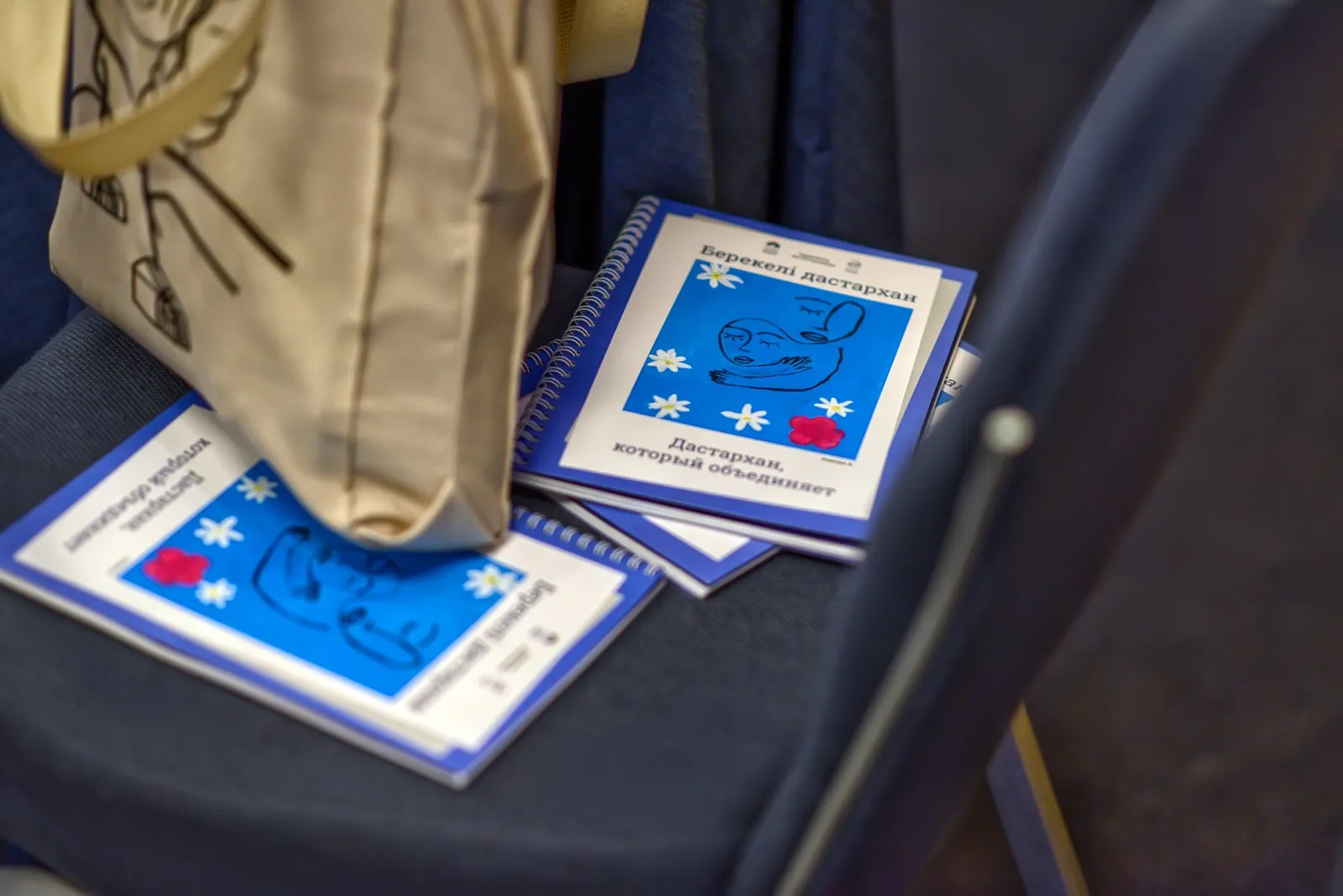
A spiral-bound recipe book: a notebook for writing down your own recipes. The inside front cover has a pocket for the card received at the meeting. The first page shows the programme's results, followed by 10 participants' stories, each under the name of a regional partner NGO and its city. This gave the numbers a human face and the regional partners visibility.
- 04
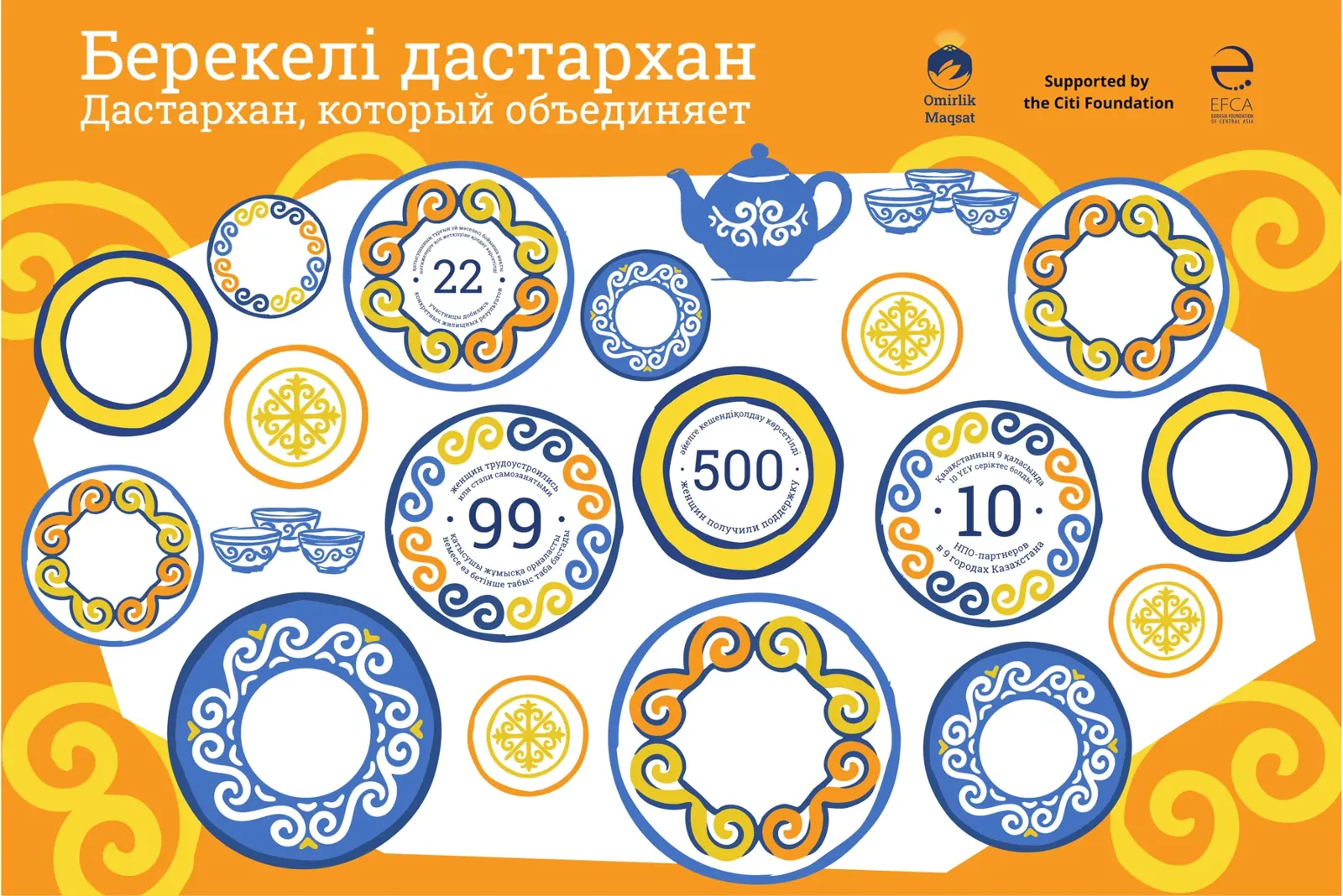
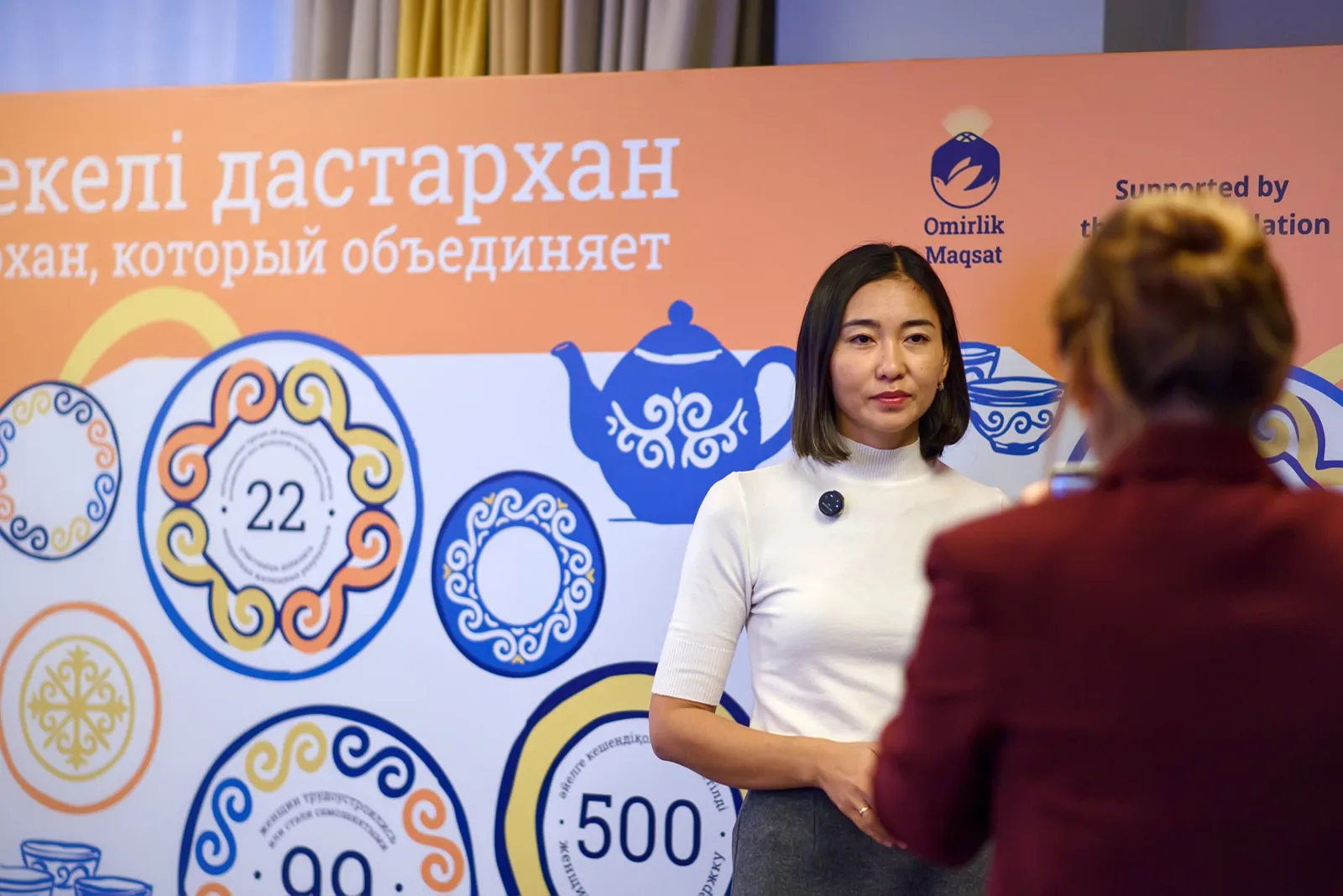
An interactive 3×2 m banner. A dastarkhan with empty dishes: some plates carry the programme's key figures, and guests filled in the rest themselves by drawing their family dishes.
- 05
Design and production. We drew illustrations in the style of children's naive painting, edited the foundation's texts, laid everything out in Kazakh and Russian, with Kazakh first, and produced the print runs.
“Family recipe” cards
20 front designs, one for each drawing from the open-air painting session. The back is the same on every card: lines for a recipe and a QR code to the programme's Instagram.
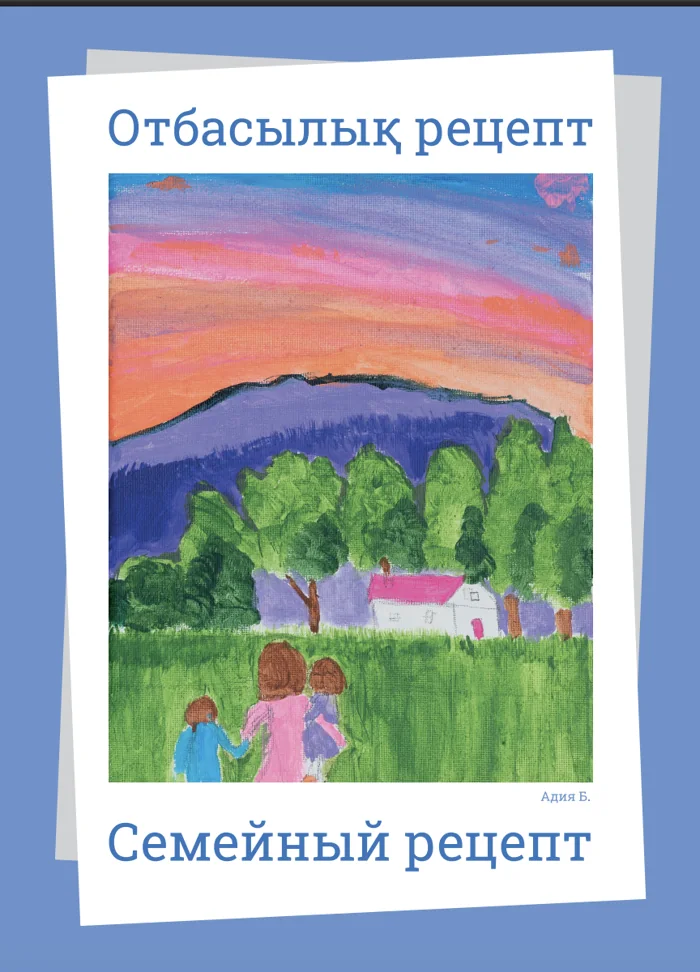 Drawing: Adiya B.
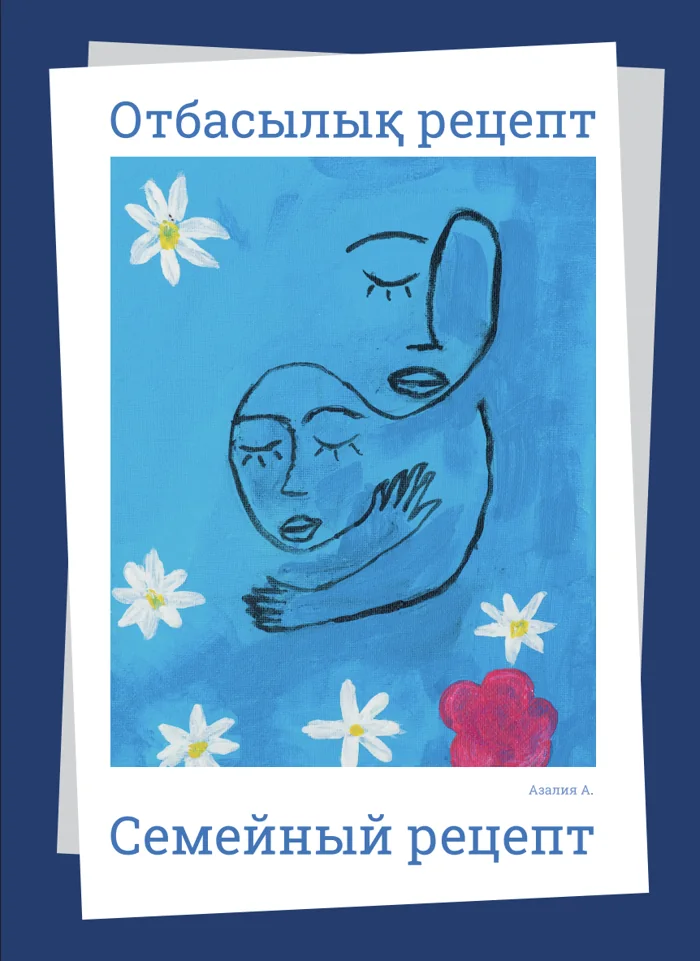 Drawing: Azaliya A.
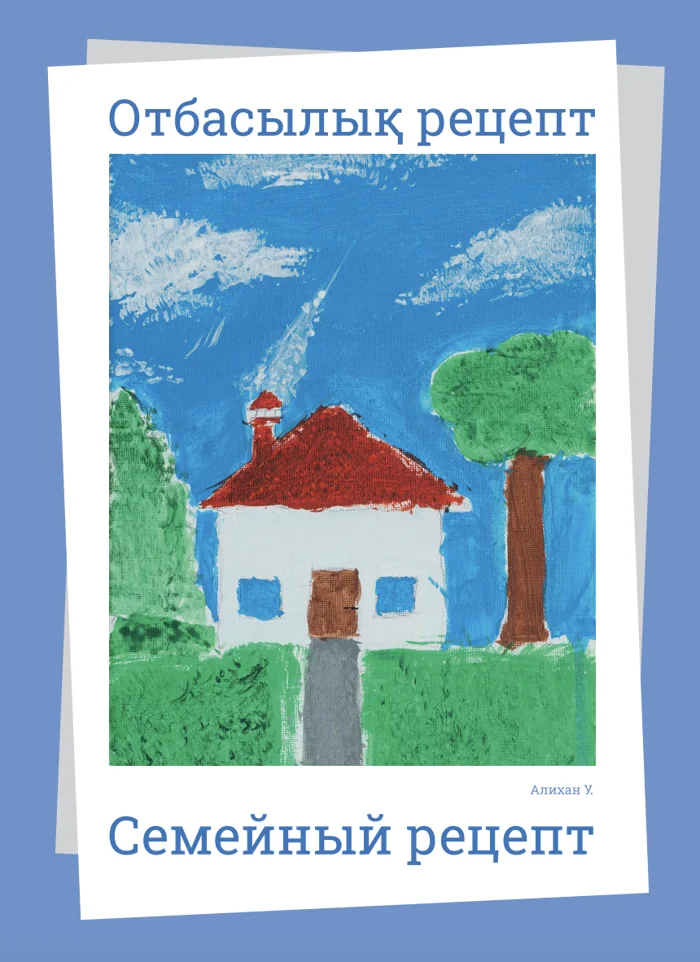 Drawing: Alikhan U.
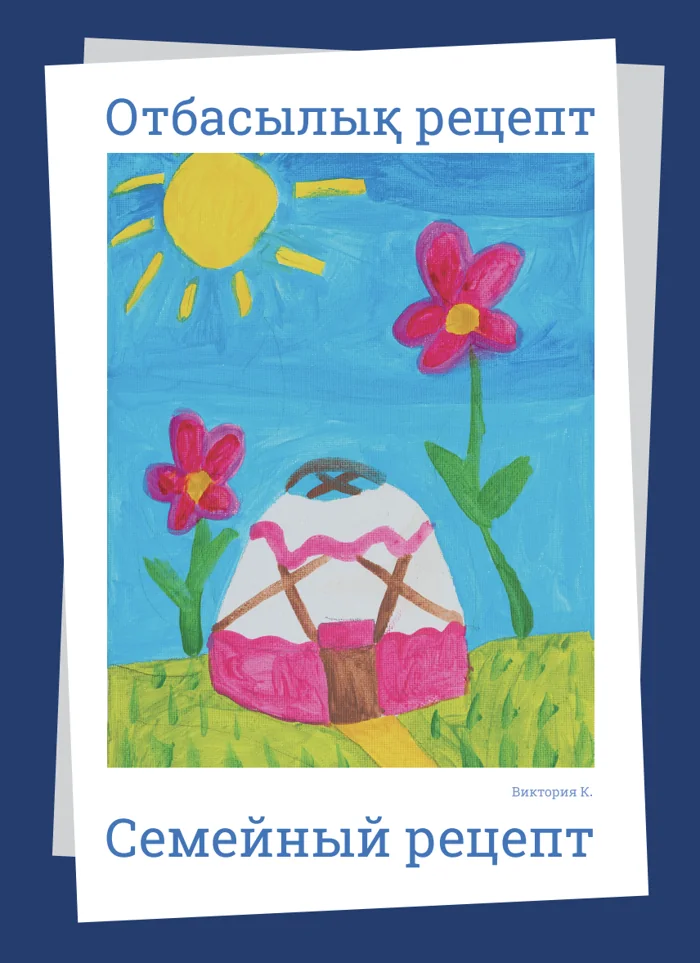 Drawing: Viktoriya K.
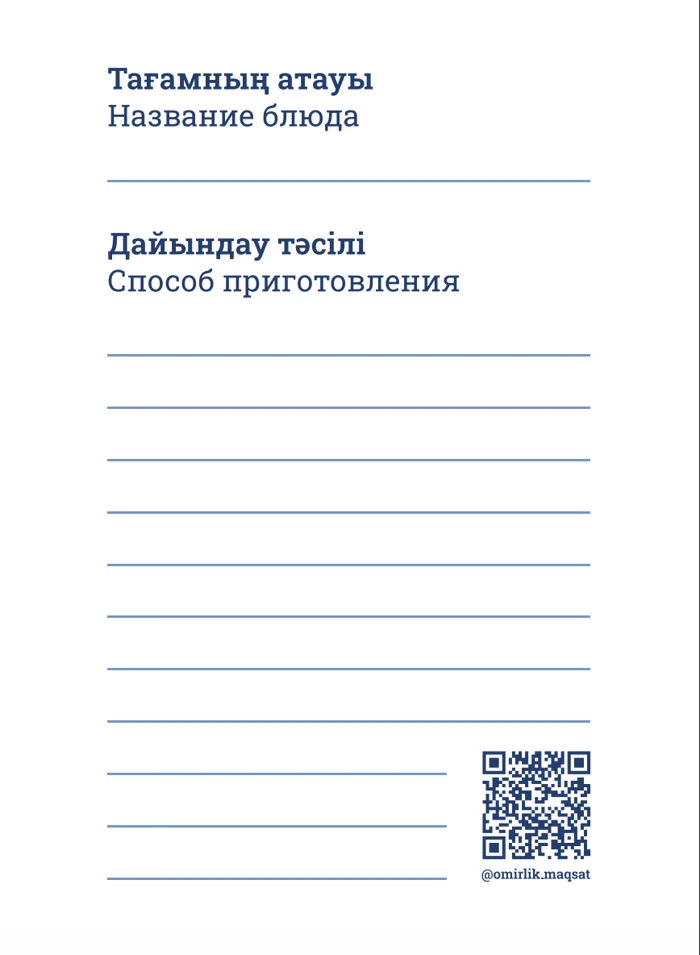 The back, the same on every card
Recipe book
80 spiral-bound books of 64 pages. The book works as a notebook for your own recipes, and inside are the programme's results and the participants' stories.
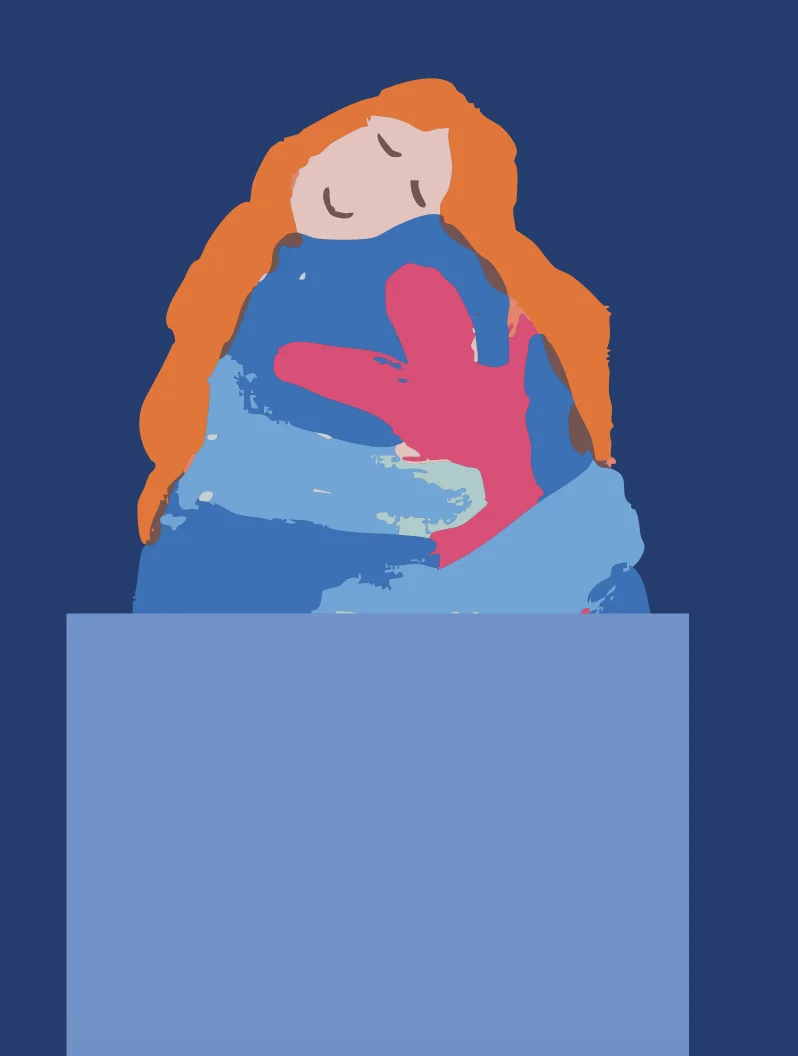 The pocket on the cover holds the card with someone else's recipe
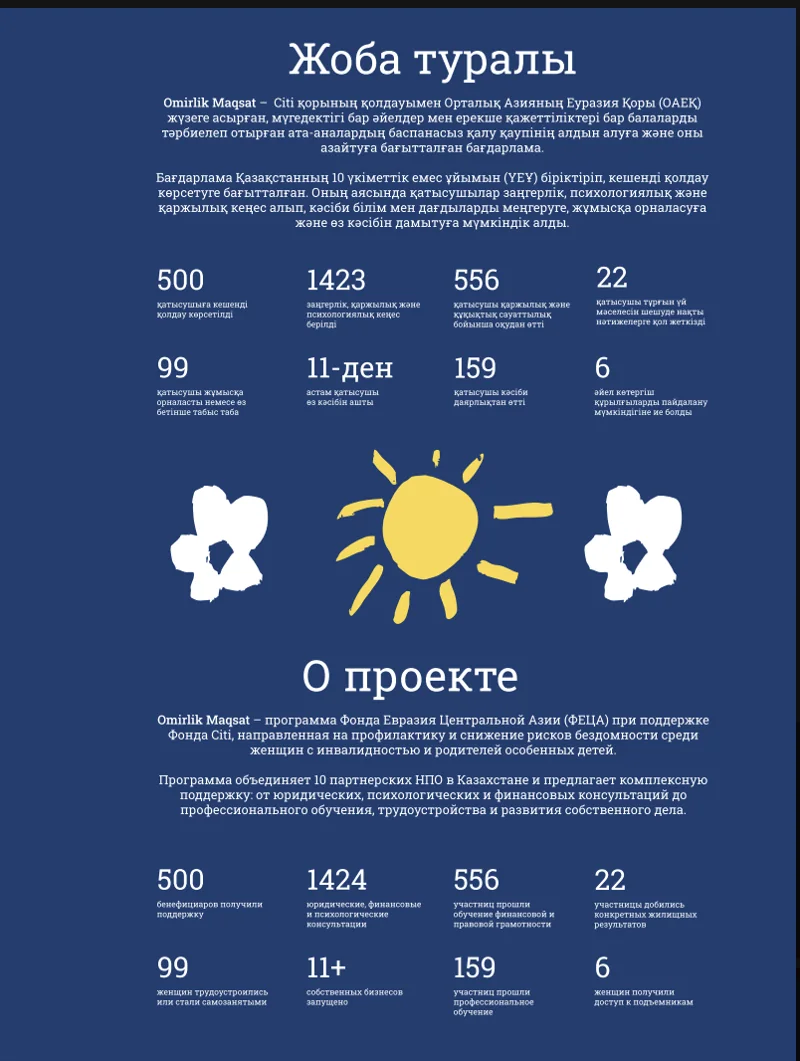 First page: about the programme and its results
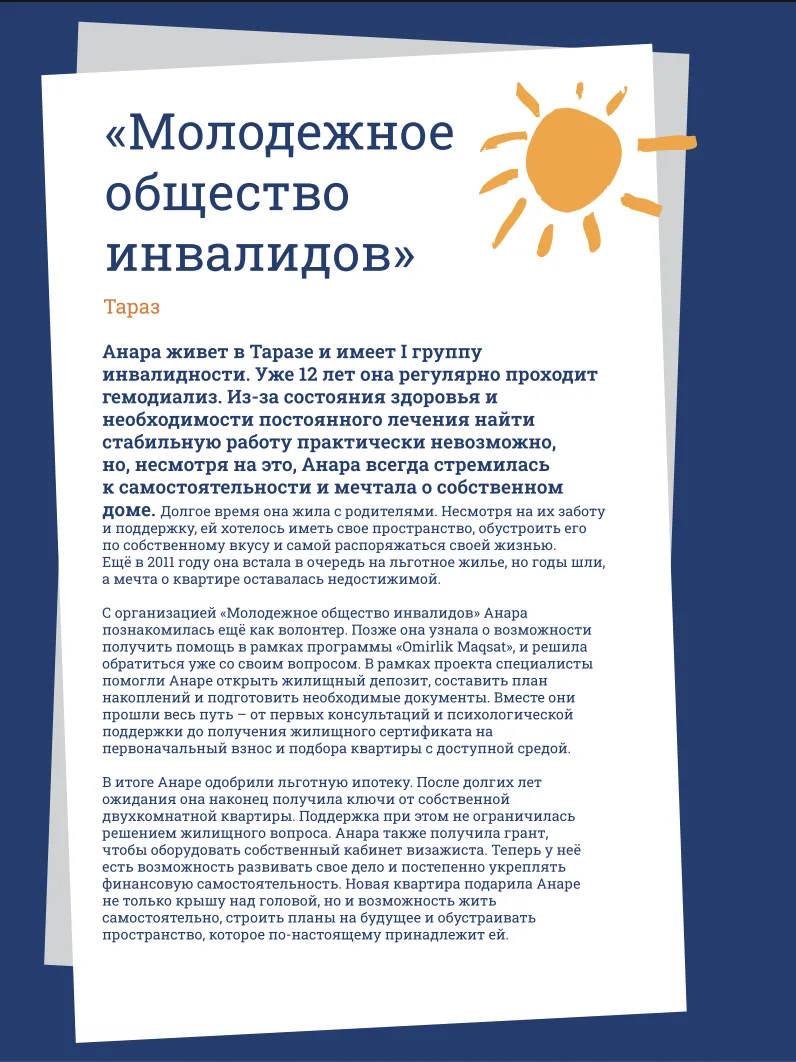 One of the 10 stories, under the name of a partner NGO and its city
 Pages for your own recipes
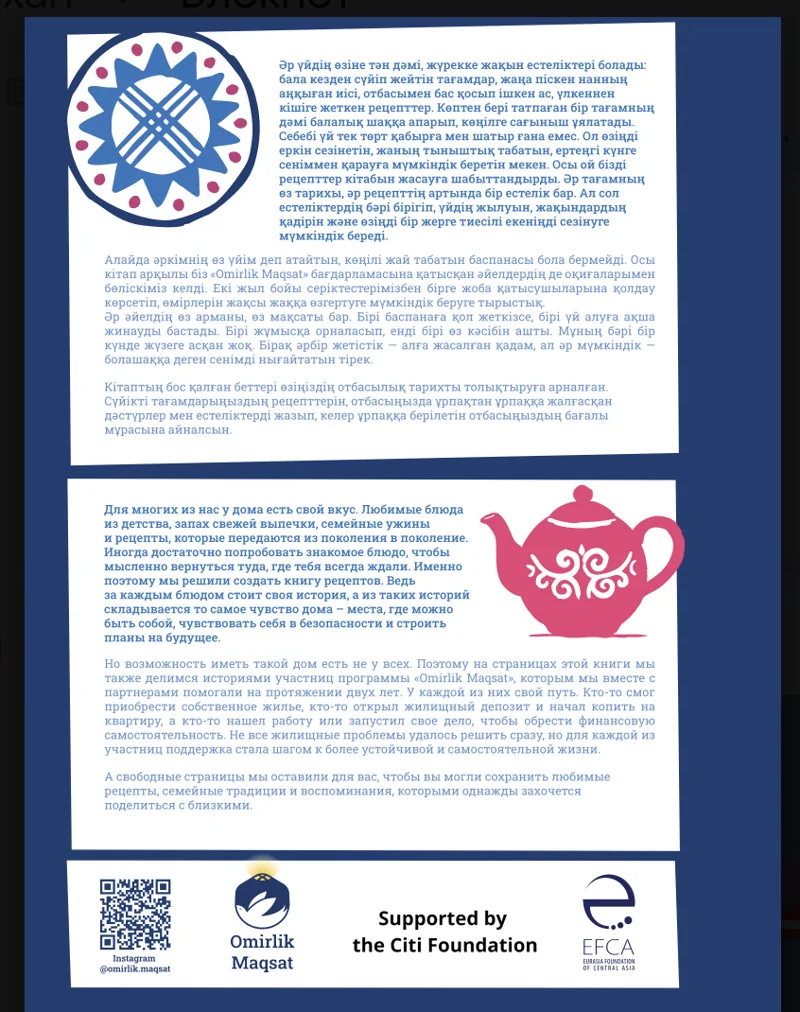 Back cover
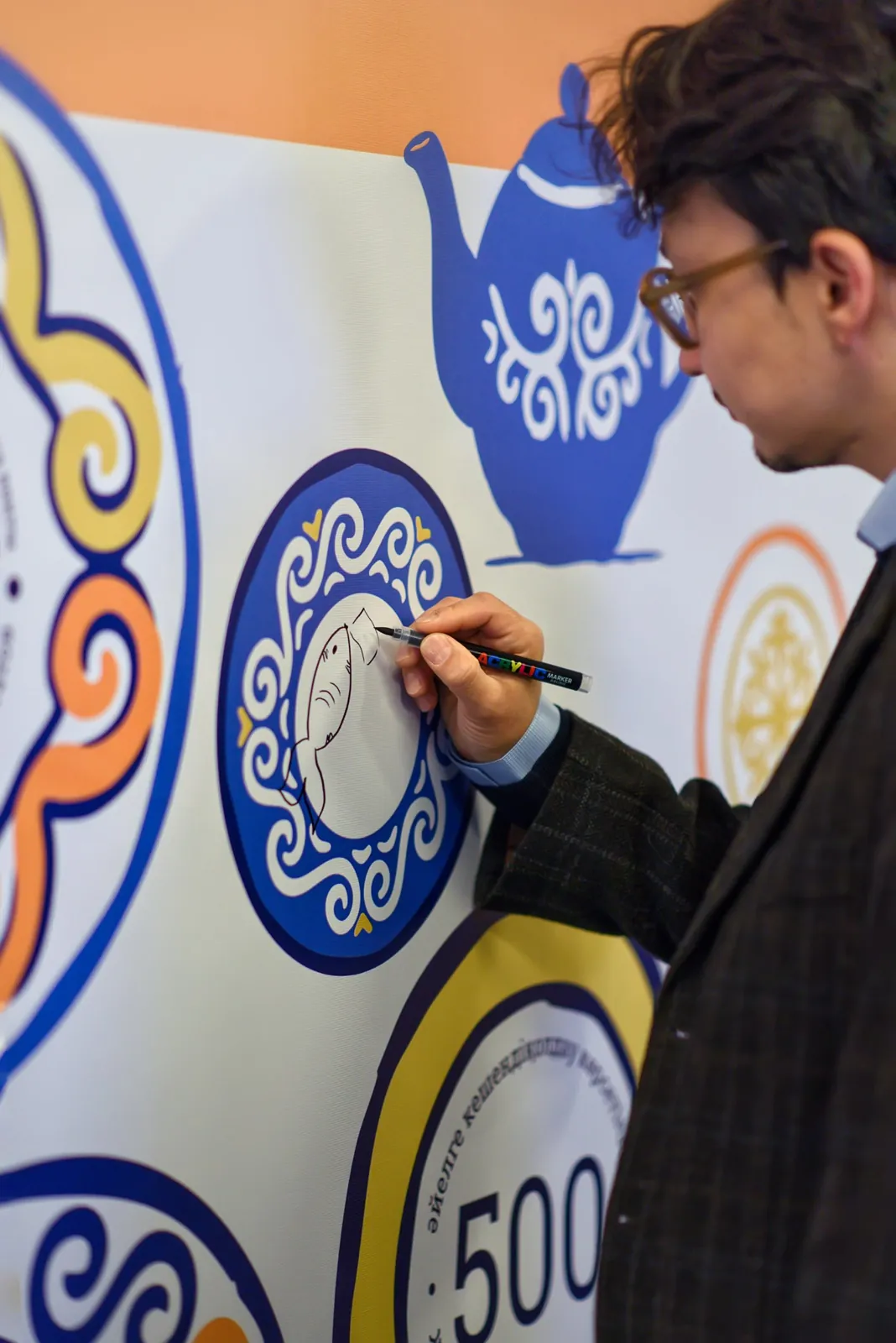
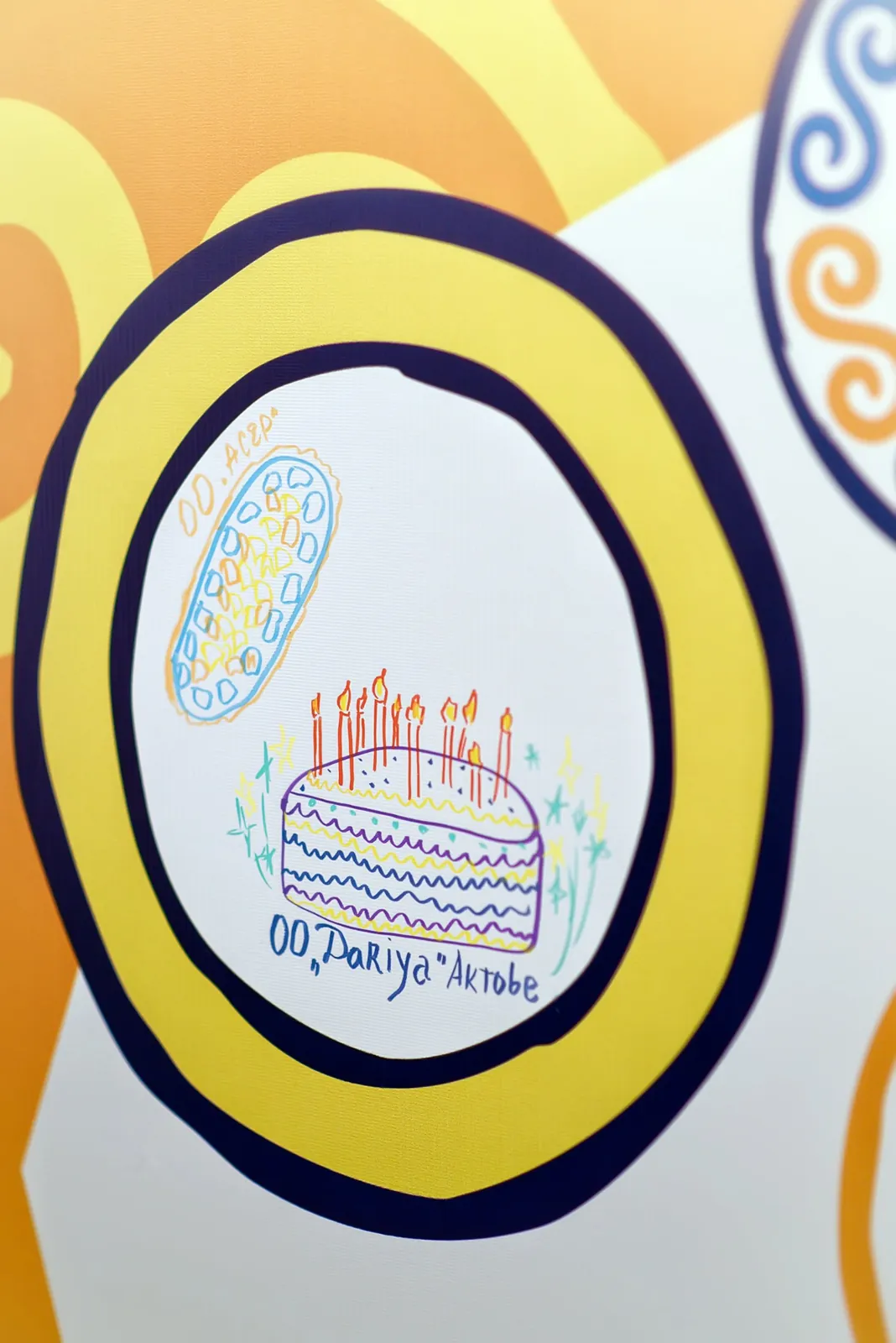
Photographer: Iris Mambur
Figures
- Interactive banner3×2 m
- Cards with 20 children's drawings80
- Books of 64 pages80
What worked
- Guests did not just listen, they took part: they filled in the banner and exchanged recipes.
- Everyone took home a piece of someone else's home: another participant's card in the pocket of their book.
- There are people behind the programme's numbers: the book holds 10 participants' stories and the regional partner NGOs.
- Merch people actually use: the spiral-bound book works as a notebook for their own recipes.
Client testimonial
For us it was important that the final “Omirlik Maqsat” event did not just sum up the programme, but helped people see the real stories behind the numbers. The TELLER team proposed a very precise and warm concept that brought all the materials together around the image of the dastarkhan, a familiar symbol of home, care and togetherness. We especially liked that our guests became participants rather than spectators: the interactive banner gradually filled up with drawings, and the cards and recipe books let everyone keep a piece of the project as a keepsake. The result was meaningful, emotional and visually coherent all at once!
Team
- Katya LeymanHead of content
- Ekaterina LoganovaArt director
- Maksim FetisovContent strategist
- Danel KhojayevaEurasia Foundation of Central Asia
- Bayan NabiyevaEurasia Foundation of Central Asia
Request
Tell us about your task
We will suggest an approach and a format of cooperation.